Face geometry
Eye Shape Detector
An eye shape detector estimates which eye-shape family you have — almond, hooded, monolid, upturned and more — from eyelid and eye-opening landmarks in a front-facing photo.
- Your eye shape, canthal tilt and eye proportions, each with its measured value
- Eyeliner, eyeshadow and lash guidance for that shape
- Your photo isn't stored; the measurements are saved to your profile
Quick answer
Your eye shape, from a front-facing photo.
An eye shape detector estimates which eye-shape family you have — almond, hooded, monolid, upturned and more — from eyelid and eye-opening landmarks in a front-facing photo.
Upload a photoHow it works
Choose a photo
Use a front-facing photo with your eyes open, looking at the camera, in even light.
We find your landmarks
Points around each eye, eyelid and brow are located in your browser.
We measure
Canthal tilt, eye width against height, and brow-to-eye distance are measured from those points.
You get your shape
You see your eye-shape family, the measurements behind it, and makeup guidance to match.
Eye shapes and what defines them
| Eye shape | What defines it | Styling focus |
|---|---|---|
| Almond | Longer than it is tall, with level corners | Most liner shapes work; a soft wing lengthens |
| Round | Taller for its width, showing more of the iris | Liner extended past the outer corner elongates |
| Hooded | A deep fold of skin between lid and brow | A lifted outer wing that stays visible with eyes open |
| Monolid | Little or no visible crease above the eye | Gradient shadow and tightlined upper lashes |
| Upturned | Outer corner higher than the inner corner (more than about 3°) | Balance with liner along the lower outer lash line |
| Downturned | Outer corner lower than the inner corner (more than about 3°) | A lifted outer flick and upper-lash focus |
| Deep-set | More distance than usual between brow and eye | Lighter lid shades bring the eye forward |
How this was analysed
How we handle your photo
What happens from the moment you choose a photo:
Your photo is resized and its location and camera metadata removed before anything is sent.
Face landmarks are located in your browser. If your browser can't, they are found on our server instead, by our own model or Amazon Rekognition.
The photo is sent once over an encrypted connection to check lighting and sharpness, and for colour tools to sample your skin. It is held in memory for that request and never written to disk or a database.
The measurements from your read, saved to your profile, which works without an account. Export or delete them any time.
Your photo is never used to train models. We don't keep it, so it can't be.
How we check our method
FaceAuraAI publishes its method, a rule check anyone can re-run and its bias notes — not scan totals or accuracy percentages. Each result carries a confidence label based on that photo's quality and how clear-cut the result was.
Stated selection biases
- Selfie uploaders who choose to use FaceAuraAI tools
- Front-facing photos with sufficient landmark confidence
- Landmarks found in the browser where it can, on the server where it can't
- English-first marketing traffic until locale depth catches up
- No age, region, or ethnicity stratification unless explicitly sampled and labeled
Hairstyle & Glasses
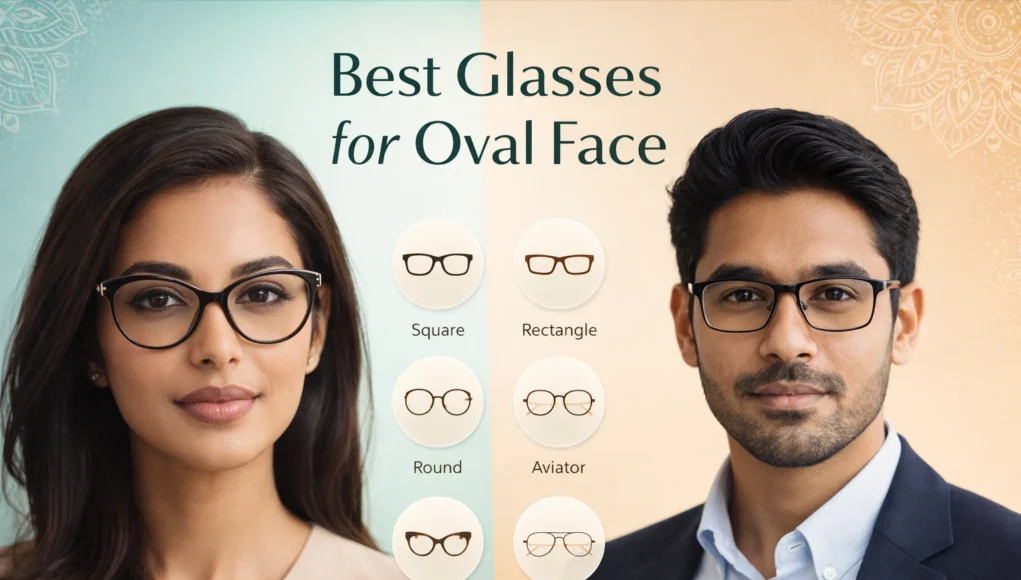
Face-shape specific haircuts and frame geometries.

Explore More FaceAura AI Tools
Measure your face, features, colours and silhouette, then get styling suggestions that explain themselves.
Face Shape Detector
Estimate oval, round, square, heart, diamond, oblong or triangle from one photo, with haircut and glasses suggestions.
Hairstyle Recommender
Find haircuts that add height, width, or softness tailored specifically to your jawline and forehead.
Glasses Finder
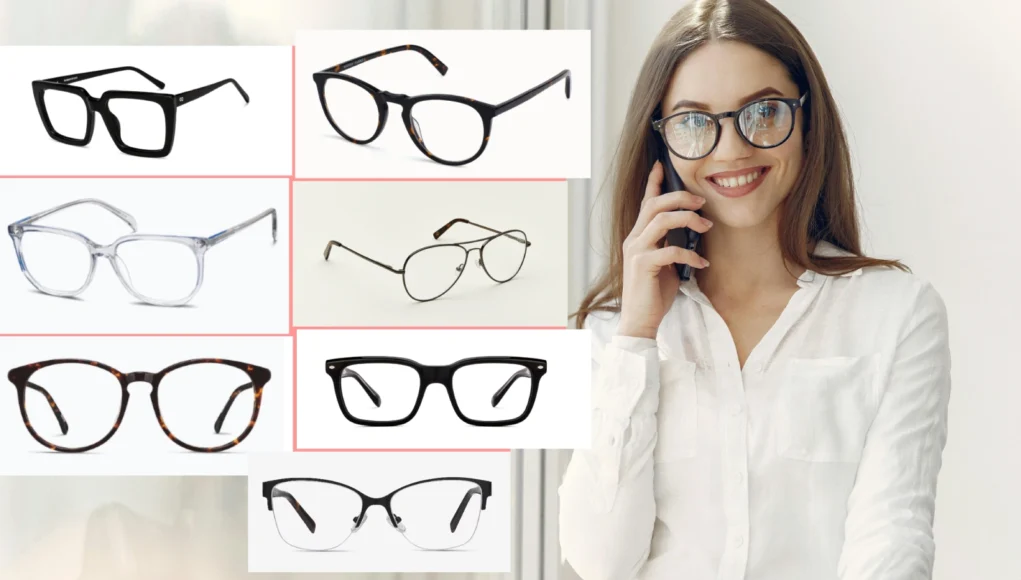
Find frame families that balance your face shape — wayfarer, aviator, cat-eye, and more.
Face Symmetry Analyzer
Measure left–right differences in your features, each shown beside a typical range, with no score.
Golden Ratio Calculator
Measure your facial proportions against the classical 1.618 ratio, reported as measurements only, with no score.
Skin Tone Detector
Read your skin tone, undertone and color season to match clothing, metals and makeup.
Eye Shape Detector
Find your eye shape — almond, hooded, monolid, round and more — plus eyeliner and makeup techniques that work.
Lip Shape Detector
Identify your lip shape and get custom contouring, cupid's bow lining, and color tips.
Body Shape Detector
Find your silhouette — hourglass, pear, apple, rectangle or inverted triangle — and clothing shapes for it, measured on your device.
Celebrity Lookalike
Upload a selfie and see your top 3 celebrity lookalikes, matched by Hive, a third-party service.
Face Shape Calculator
Enter forehead, cheekbone and jaw widths and face length to estimate your shape from tape measurements.
Face Shape Quiz
Answer 6 visual questions to estimate your face shape without taking a photo.
Frequently Asked Questions
Is the eye shape detector free?
Yes. Guests get 2 free reads a day, and a free account gets 5 a month. The limit is checked before you choose a photo, so you never upload and then hit a paywall.
What is canthal tilt?
Canthal tilt is the angle between the inner and outer corners of your eye. A positive tilt means the outer corner sits higher (upturned); a negative tilt means it sits lower (downturned). Most eyes fall within a few degrees of level.
Can I have more than one eye shape?
Yes. Features combine: an almond eye can also be hooded, for example. The detector names the family that the measurements point to most clearly and, where relevant, a secondary type.
Why does my result differ between photos?
Head angle, squinting and lighting change how the eyelid landmarks sit. Take the photo straight on, eyes fully open, with light from the front, and compare like with like.
Do you store my photo?
No. Your photo is used for this one read and then discarded; it is never written to disk or a database. What we keep are the measurements, saved to your profile, which you can export or delete at any time.
How reliable is the result?
Every result comes with a confidence label based on the quality of your photo: lighting, sharpness, head angle and how many landmarks were measured directly. We don't publish a single accuracy percentage, because it would depend on photos we haven't seen. A straight-on photo in even light gives the most reliable read.