Oval Face Shape
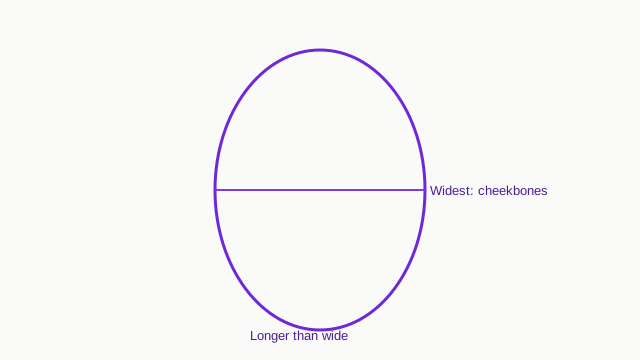
An oval face is longer than it is wide, with cheekbones often the widest third and a gently rounded jaw.
Quick answer
Balanced, so most styles work.
An oval face is longer than it is wide, with your cheekbones as the widest point, a forehead slightly wider than your jaw, and a jaw that curves smoothly into a rounded chin. Because the widths taper evenly from cheekbones to chin, most haircuts and frames work. Styling an oval face is about the look you want, not about correcting proportions.
Check your shape from a photoHow to recognise an oval face shape
Look straight into a mirror, or at a front-facing photo, with your hair pulled back off your forehead, temples and jaw. Then check four things.
The mirror checklist
- Your face is clearly longer than it is wide, but not dramatically so.
- Your cheekbones are the widest part of your face.
- Your forehead is a little wider than your jaw.
- Your jaw has no sharp corners and curves smoothly into your chin.
If all four hold, oval is your likely shape. If your face looks much longer than wide with straight sides, read the oblong comparison below. If your forehead and chin both look narrow next to your cheekbones, read the diamond comparison.
How the face shape detector reads an oval face
The face shape detector places 468 landmarks on your face and turns the distances between them into ratios. It starts scoring oval when face length divided by cheekbone width sits between 1.18 and 1.23 and neither the diamond nor the triangle rule has scored strongly. Points are added for a jaw angle of 136° or wider (a soft corner rather than a sharp one), for temples 1.13 to 1.18 times jaw width, and for a forehead under 0.70 of cheekbone width with the jaw no more than 0.89, so the cheekbones lead. A squared-off jaw takes points away. Each is a scoring rule, not a pass/fail line; the methodology lists them all.
The detector measures length from the top of its forehead outline, which sits below your hairline, so its numbers run lower than a tape measure's. If you're measuring by hand, use the face shape calculator, which has its own reference numbers for tape readings.
Oval or oblong? Oval or diamond?
Oval sits between two neighbours, and each one differs by a single measurement.
Oval or oblong
Oblong is longer, with forehead, cheeks and jaw close to the same width. On an oval face the cheekbones lead and the jaw tapers. Oval's length band tops out at 1.23 and the detector starts scoring oblong at 1.25, so a face measuring about 1.24 scores neither on length and is decided by its other measurements. That narrow gap is why the two often appear together in a result. If your face reads long and your jaw is nearly as wide as your cheekbones, compare the two in oval vs oblong face shape.
Oval or diamond
Diamond narrows more sharply at both the forehead and the chin, leaving the cheekbones clearly dominant. Both routes of the detector's diamond rule need a narrow forehead, 0.71 of cheekbone width or less on a shorter face and 0.73 or less on a longer face with a narrower chin, and a strong diamond score stops oval scoring at all. A low hairline or a fringe can hide forehead width in a photo and push either way, so pull your hair back before you judge. See oval vs diamond face shape.
Hair direction for an oval face
The aim is to keep the balance you already have: most lengths, partings and textures work. Choose a cut for the look you want, then adjust the details.
Women's cuts
- Long layersLayers keep the oval outline without adding bulk at the cheeks.
- Blunt bobA clean, jaw-length line shows off balanced proportions.
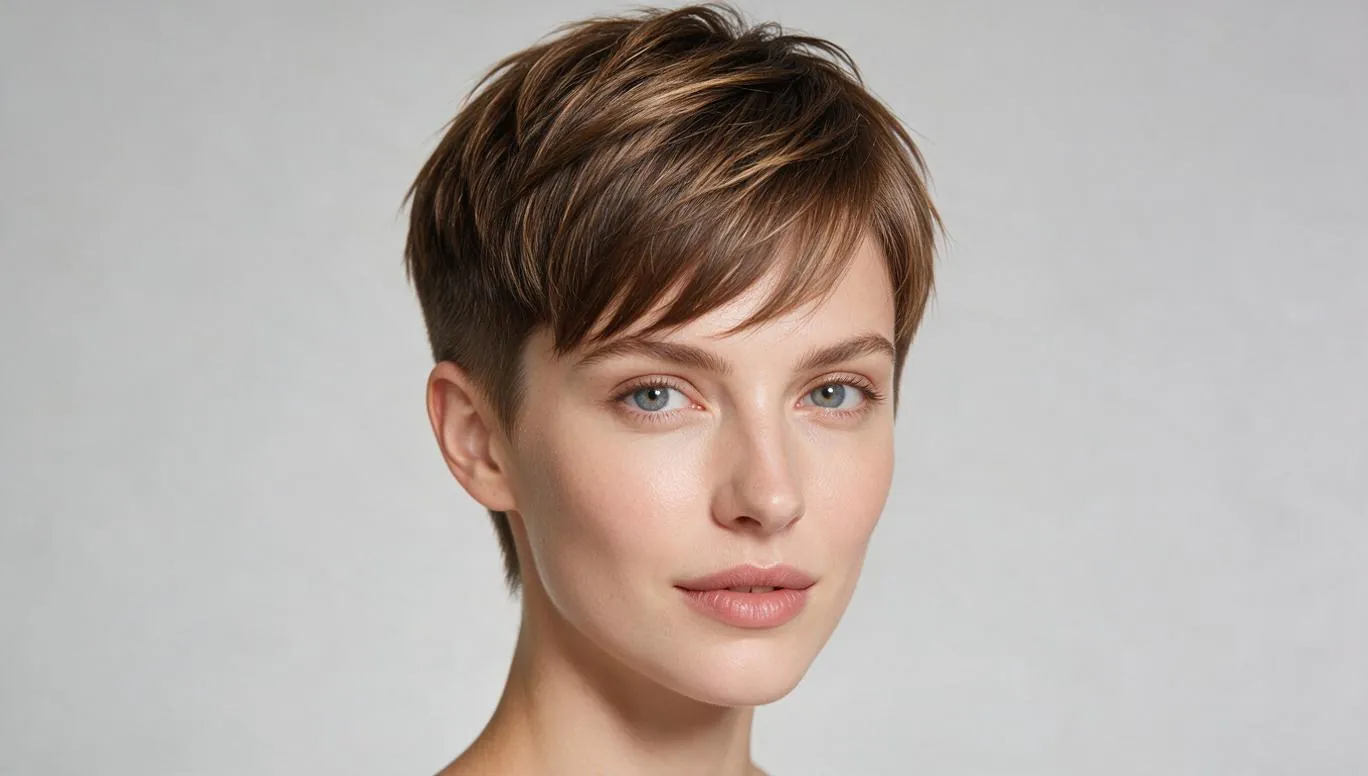
- Soft pixieA tapered pixie keeps your cheekbones visible without adding width at the sides.
- Textured cropLight texture at the crown is enough. An oval face rarely needs extra height.
More cuts, with photos and styling notes, are in the women's haircuts for an oval face guide.
Men's cuts
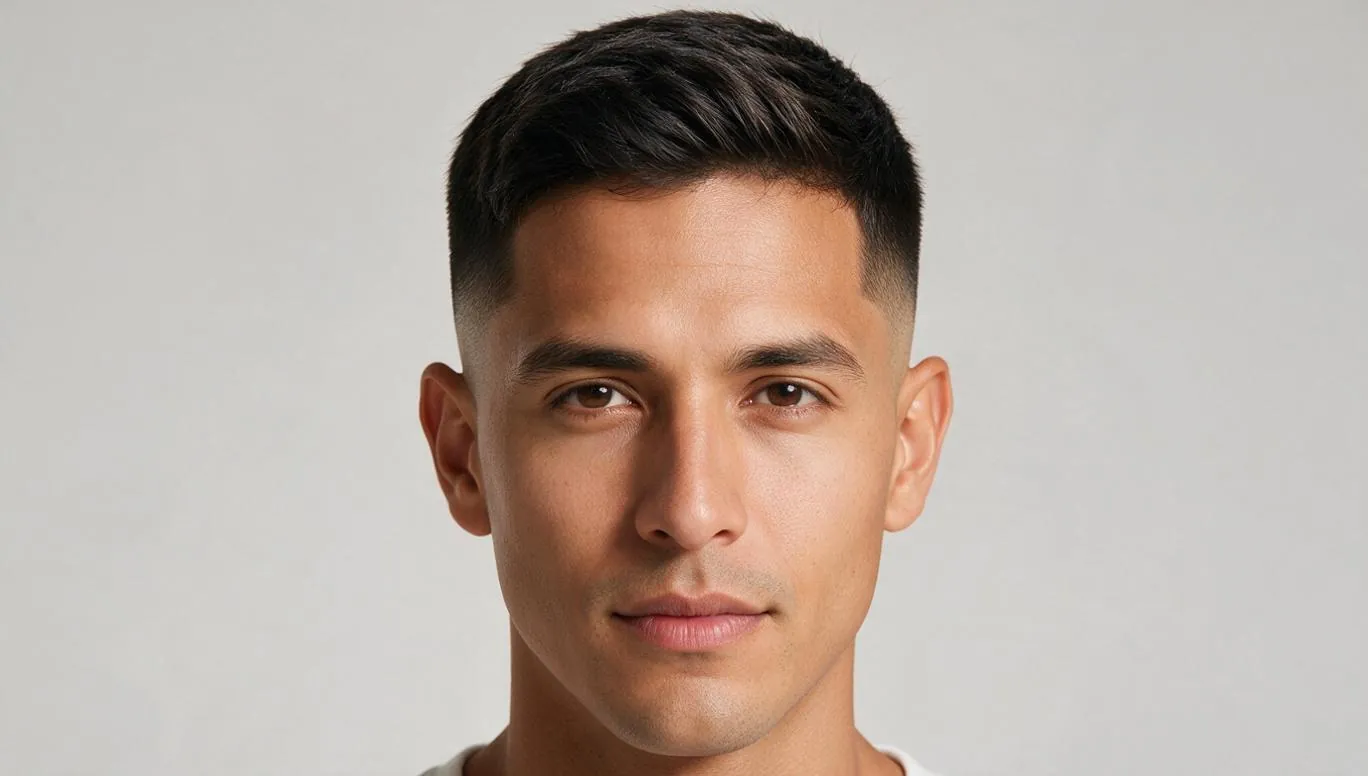
- Textured crop. Most short cuts work on an oval face. Texture at the crown keeps the outline from looking flat.
- Soft quiff. A small quiff is optional. Wear it for style, not to change your proportions.
The men's haircuts for an oval face guide goes further, including fades and longer styles.
What to avoid
Very little is off-limits. Most lengths work, so change texture and part before you change length. The one thing to watch is a lot of volume piled on top, which can make an oval face read shorter and rounder than it is.
The hairstyle recommender ranks these cuts against your own measurements, including your forehead proportion.
Glasses for an oval face
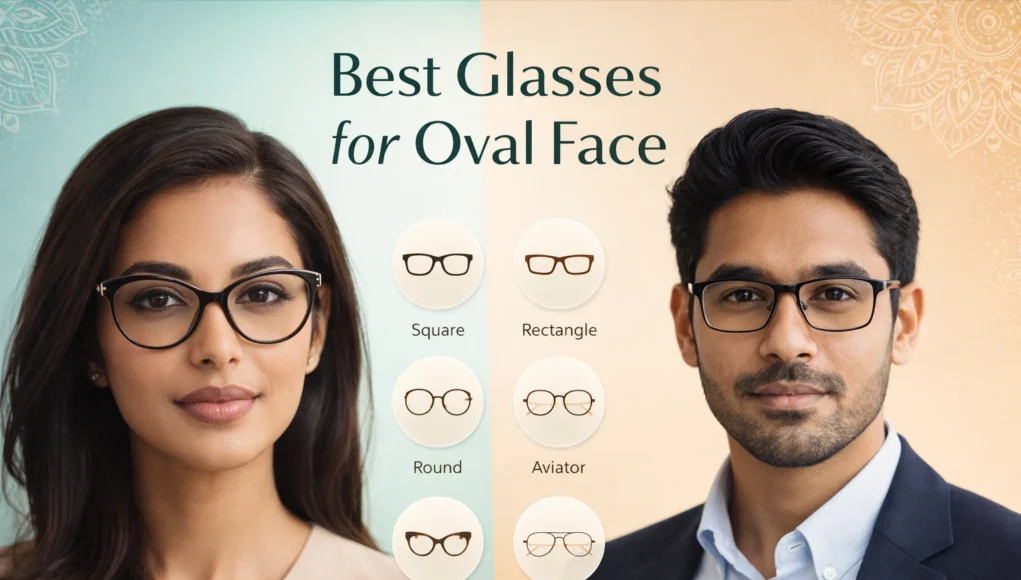
Most frame families suit an oval face, so pick the one that matches the look you want. The practical limit is width: avoid frames much wider than your cheekbones, which make the face look narrower than it is.
- WayfarerClassic angles sit well on an already balanced width.
- AviatorThe teardrop adds a little width without fighting your proportions.
- RectangleA clean rectangle keeps the oval outline readable.
- Cat-eyeA lifted outer corner plays off high cheekbones.
For bridge fit, frame sizing and every frame family side by side, see glasses for your face shape. To rank frames for your own face, use the glasses finder. Our guide to the best glasses for an oval face has more examples.
Beard direction (if you grow one)
An oval jaw already has a balanced outline, so a beard is a style choice rather than a correction. Short stubble keeps the jaw clean without changing proportions. A short boxed beard follows the oval outline neatly. Most short styles work; change density at the chin before you change length. The men's face shape guide covers beards for every shape.
Celebrities with an oval face
Seeing how stylists cut hair and choose frames for people who share your shape is a practical source of ideas. Browse celebrities with an oval face shape.
Earrings and hats
Medium hoops or teardrop drops sit well on an oval face. Avoid earrings that hang wider than your cheekbones, which pull attention outward past your widest point. Most brim widths work. A medium fedora, or a beanie worn with the brim level, keeps the oval outline readable.
If you're between two shapes
Most faces don't sit squarely in one shape. When your forehead, cheekbone and jaw widths sit close to the line between two shapes, the face shape detector names both and shows how close you are to each.
Oval's neighbours are oblong, which is longer, and diamond, which is narrower at the forehead and chin. A result that reads mostly oval with some oblong means you can borrow from the oblong advice: a fringe or a little side volume works well. A result near diamond means a soft fringe that fills the forehead is worth trying.
Not sure if you have an oval face shape?
Upload a front-facing photo and the face shape detector measures your forehead, cheekbone and jaw widths against your face length, then tells you whether you read as oval, with a confidence label and the reasons behind it. Landmarks are found in your browser first, and your photo isn't stored.
Check your shape with the face shape detector
Frequently asked questions
Is oval the ideal face shape?
No. No face shape is better than another. Oval is often called balanced because its widths taper evenly from the cheekbones to the chin. That only means fewer styling constraints. It says nothing about how anyone looks.
Is oval the most common face shape?
FaceAuraAI doesn't publish shape frequencies yet. We'll only publish counts with a documented sample window and stated biases. Figures quoted elsewhere come from different shape lists, rules and users. Our face shape statistics page explains the policy.
How is an oval face different from an oblong face?
An oblong face is longer, with forehead, cheekbones and jaw close to the same width, so the sides look straight. An oval face is shorter, with the cheekbones clearly widest and a jaw that tapers. The oval vs oblong comparison shows the difference side by side.
Can my face shape change over time?
Your bone structure sets the frame, but weight, age and hairstyle change how your proportions read in a photo. Cheek fullness or a different hairline can move a result towards a neighbouring shape. Rescan when you want fresh styling ideas. The result is a styling estimate, not an identity.
Which haircuts suit an oval face?
Almost all of them. Long layers, a blunt bob and a soft pixie all keep the balanced outline, and a textured crop or a soft quiff works well for shorter men's styles. Change texture and parting before you change length.
Which glasses suit an oval face?
Most frame families. Wayfarer, aviator and rectangle frames suit an oval face, and a cat-eye plays off high cheekbones. The one rule is to avoid frames much wider than your cheekbones.
Why did the detector say oval with medium or lower confidence?
Something in the photo held the read back, such as uneven light, a slight head turn or hair over the jaw, or oval and a neighbouring shape scored close together. When no shape's rule scores at all, the detector names oval and always marks it Lower confidence. Lower confidence is an honest result, not an error. A straight-on photo in even light usually firms it up.