Oblong Face Shape
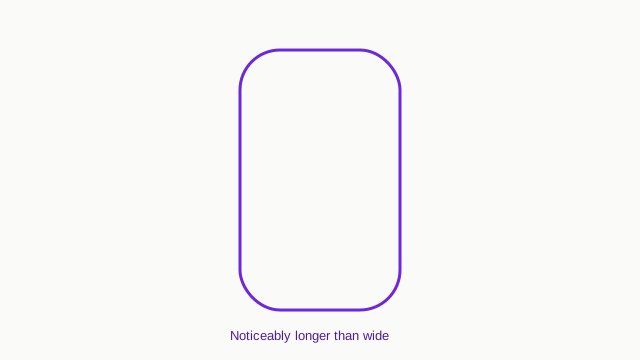
An oblong (rectangle) face is noticeably longer than wide, with forehead, cheek, and jaw widths that stay fairly even.
Quick answer
Long, with even widths.
An oblong face, also called rectangle, is noticeably longer than it is wide, with forehead, cheekbones and jaw close to the same width. Styling an oblong face adds width and breaks up length: volume at the sides, a fringe, and wide or deep frames. If you can't tell oblong from oval, check whether your cheekbones stand out as the widest point.
Check your shape from a photoHow to recognise an oblong face shape
Look straight at a mirror or a front-facing photo with your hair pulled back and your chin level. Then check four things.
The mirror checklist
- Your face is clearly longer than it is wide.
- Your forehead, cheekbones and jaw are close to the same width.
- The sides of your face run fairly straight from temple to jaw.
- Your chin is not especially narrow or pointed.
If all four hold, oblong is your likely shape. If your face is long but your cheekbones clearly stand out and your jaw tapers, read the oval comparison below. If the widths are even but your face is about as wide as it is long, look at square instead.
A high camera angle or a chin tilted up can make any face read longer, so hold the phone at eye height.
How the face shape detector reads an oblong face
The face shape detector places 468 landmarks on your face and scores each of the seven shapes against published rules. It starts scoring oblong when two line up: face length divided by cheekbone width is 1.25 or more, and the chin angle is 105° or wider. A longer face scores more, and a balanced jaw and a jaw angle of 135° to 138° each add points.
"Balanced jaw" is the even-width check: your jaw stays at 0.87 of your cheekbone width or more instead of tapering away. The wide chin angle is why an oblong chin reads broad rather than pointed.
The 1.25 line sits just above oval's ceiling of 1.23, so a face measuring about 1.24 scores on neither length band and its other measurements decide. These are scoring rules, not pass marks: the shape with the highest total wins, and a face near that gap can show both in a blend.
The detector measures length from the top of its forehead outline, which sits below your hairline, so its numbers run lower than a tape measure's. Don't compare a tape reading with 1.25. If you're measuring by hand, use the face shape calculator, which has its own reference numbers.
Oblong or oval? Oblong or square?
Oblong has two close neighbours. Oval differs in length and in where the width sits; square shares the even widths but not the length.
Oblong or oval
Oval is shorter, with cheekbones clearly the widest point. Length is the first measurement, and this is the closest pair in the system: the detector scores oblong from 1.25, and oval's length band tops out at 1.23. Width is the second check. On an oval face the cheekbones lead and the jaw tapers; on an oblong face the forehead, cheekbones and jaw stay even. The short version is length emphasis versus cheekbone-led width. See oval vs oblong face shape for the side-by-side table.
Oblong or square
Square shares the even widths but is about as wide as it is long, with angular jaw corners. The detector's square rule centres on the jaw, an angle of 136.5° or tighter and a jaw at least 0.885 of cheekbone width, while oblong's rule centres on length. Square only scores up to a length of 1.25 and loses points beyond it, exactly where oblong starts. If your widths are even and your jaw corners are sharp, your face length decides between the two. The square face shape guide covers that side.
Hair direction for an oblong face
The aim is to add width and break up length: volume at the sides, a fringe, and wide or deep frames. Every cut below does one of two jobs. It widens the sides, or it cuts vertical length with a fringe.
Women's cuts
- Blunt or curtain bangsA fringe cuts vertical length, so your face reads shorter without changing the rest of the cut.
- Waves with width, not heightSide volume makes a long face read shorter. Keep the movement at cheek level rather than at the crown.
- Pixie with blunt bangsThe fringe cuts length. Keep the crown low, not tall, or the height undoes the fringe.
- Side-swept crop with widthA horizontal sweep at the temples adds width where an oblong face reads longest.
Photos and styling notes for each are in the women's haircuts for an oblong face guide.
Men's cuts
- Fringe with a medium crop. A fringe is the fastest way to make an oblong face read shorter before you change overall length.
- Side-swept medium length. A horizontal sweep adds width without extra height.
The men's haircuts for an oblong face guide goes further, with more lengths and examples.
What to avoid
Avoid extra height on top and very long, straight, centre-parted hair. Height stacks on top of length, and long straight hair parted in the middle draws two vertical lines down the sides of your face. This is the opposite of the round face advice: a round face needs length, and an oblong face already has it.
The hairstyle recommender ranks these cuts against your own measurements.
Glasses for an oblong face
Choose wide or deep frames. Oblong faces benefit from wider frames, because horizontal weight across the middle of the face breaks up its length.
- AviatorWidth at the sides makes a long face read shorter.
- WayfarerA deeper frame adds horizontal weight.
- BrowlineA bold top line stops the face reading extra-long. The glasses finder lists it when you choose men's frames.
- Cat-eyeDecorative temples add width, not height. The glasses finder lists it when you choose women's frames.
Skip very narrow or extra-tall frames that lengthen the face. A narrow frame leaves the sides of your face bare, and a tall one adds another vertical line.
For frame sizing, bridge fit and every frame family side by side, see glasses for your face shape. To rank frames against your own face, use the glasses finder. Our guide to the best glasses for an oblong face has more examples.
Beard direction (if you grow one)
A beard can add width at the sides and keep length off the chin. Wider cheek coverage, shorter chin puts horizontal mass at the sides, which makes a long face read shorter. A corporate short beard keeps the chin short, so vertical length does not stack. Avoid long pointed chin beards that add more vertical length. The men's face shape guide covers beards for every shape.
Celebrities with an oblong face
Seeing how stylists cut hair and choose frames for well-known people with long, even-width faces is a practical source of ideas. Browse celebrities with an oblong face shape; the shapes there are illustrative, not measured.
Earrings and hats
Choose earrings and hats that add width rather than height. Wide hoops and clustered studs add horizontal width; skip long linear drops, which lengthen the face further.
Wide brims and newsboy caps make a long face read shorter. Avoid tall top hats, and beanies with extra height at the crown, which add length where you already have it.
If you're between two shapes
When your measurements sit close to the line between two shapes, the face shape detector names both and shows how close you are to each.
For oblong, the nearest line is oval's. Oval's length band tops out at 1.23 and oblong's starts at 1.25, so a very small difference in measured length separates them, and a mostly oblong, some oval result is what you'd expect near that line. If that's your result, the freedom of the oval guide applies to you too: most cuts work, and the fringe and side volume on this page become options rather than needs.
A long face with sharp jaw corners can also score on square. Then borrow from the square guide: layers and movement around the jaw soften the corners, while side width still breaks up length.
Not sure if you have an oblong face shape?
Upload a front-facing photo and the face shape detector compares your face length with your cheekbone width and checks whether your forehead, cheekbones and jaw stay even. It then tells you whether you read as oblong, with a confidence label and the reasons behind it. Landmarks are found in your browser first, and your photo isn't stored.
Check with the face shape detector
Frequently asked questions
Is an oblong face the same as a rectangle face?
Yes. Oblong and rectangle are two names for the same face shape: longer than wide, with even widths. FaceAuraAI uses oblong for this page and the detector result, and mentions rectangle so either search lands here.
Is an oblong face the same as a long face?
Not quite. "Long face" describes only the length. Oblong adds a second condition: your forehead, cheekbones and jaw stay close to the same width. A long face with the cheekbones clearly widest and a tapering jaw may read as oval instead.
How is an oblong face different from an oval face?
Two measurements separate them. On length, the detector scores oblong when face length divided by cheekbone width is 1.25 or more, while oval's length band tops out at 1.23. On width, an oblong face keeps forehead, cheekbones and jaw even, while an oval face is led by the cheekbones. The oval vs oblong comparison shows both side by side.
Why does a tape measure make my face read longer than the detector does?
A tape runs from your hairline to your chin. The detector measures from the top of its forehead outline, which usually sits below your hairline, so tape readings come out longer. Each method has its own reference numbers: use the face shape calculator for tape readings and the detector for photos.
Which haircuts suit an oblong face?
Which glasses suit an oblong face?
Wide or deep frames. Aviator and wayfarer frames add horizontal weight. For men's frames, a browline's bold top line stops the face reading extra-long; for women's frames, a cat-eye adds width, not height. Skip very narrow or extra-tall frames, which lengthen the face.
Why did the detector say oblong with medium or lower confidence?
Either oblong and oval scored close together, because their length rules sit just 0.01 apart, or something in the photo held the read back: a chin tilted up, a high camera angle, or hair adding height at the crown. Lower confidence is an honest result, not an error. A straight-on photo at eye height in even light usually firms it up.

