Oval vs Diamond Face Shape
Oval and diamond faces can both show cheekbone emphasis, but diamond faces narrow more through the forehead and chin while oval keeps a smoother taper.
Quick answer
Same widest cheekbones. The forehead decides.
Oval tapers gently; diamond narrows sharply at forehead and chin. Both can have the cheekbones as the widest point, so check your forehead. Both detector diamond routes need it no wider than 0.73 of cheekbone width; once either is met, oval stops scoring.
Check your shape from a photoKey difference: Forehead and chin width relative to cheekbones
Start with forehead width divided by cheekbone width. The detector scores diamond with a forehead no wider than 0.71 on a shorter face, or 0.73 on a longer one with a jaw no wider than 0.89 and a chin of 110° or tighter. Oval scores a length of 1.18 to 1.23 times cheekbone width, so on an oval-length face the chin tips it.
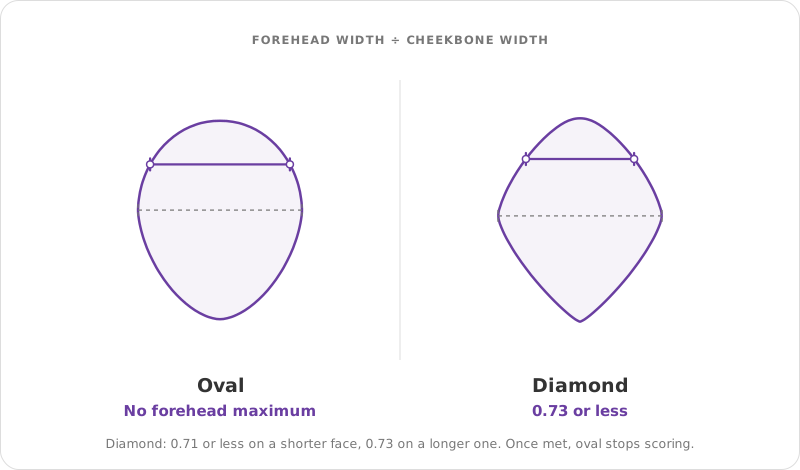
A narrow jaw can't separate them; the forehead and chin together can.
These are landmark ratios, not tape readings; for hand measurements, use the face shape calculator.
Which one are you? The mirror check
Use a mirror or a front-facing photo, hair pulled back off your temples.
- Is your forehead noticeably narrower than your cheekbones? Yes points to diamond.
- Is your forehead only a little narrower than your cheekbones? Yes points to oval.
- Is your chin narrow, or pointed? Yes points to diamond.
- Does your face taper gently and evenly from cheekbones to chin? Yes points to oval.
Oval and diamond side by side
Mirror traits come first, then the detector's rules.
| Aspect | Oval | Diamond |
|---|---|---|
| Forehead | Slightly narrower than cheeks | Noticeably narrower |
| Cheekbones | Often widest | Clearly widest |
| Chin | Soft taper | Narrower, more pointed |
| How the detector scores it | L/W ∈ [1.18, 1.23]; + ∠jaw ≥ 136°; + W_forehead / W_cheek < 0.70 with W_jaw / W_cheek ≤ 0.89 | W_forehead / W_cheek ≤ 0.71, ∠chin 115°–122°, ∠jaw 133°–137°, L/W ≤ 1.15; or ∠chin ≤ 110°, W_forehead / W_cheek ≤ 0.73, W_jaw / W_cheek ≤ 0.89, L/W ≥ 1.18 |
| Styling aim | Keep the balance you already have: most lengths, partings and frame shapes work. | Add width at the forehead and chin: fringes, volume at the ends, and frames with a strong top line. |
These are scoring rules, not gates: a face earns points on every shape whose conditions it meets, and the highest score leads.
When photos sit between both
A cheekbone-led face with a forehead or chin near diamond's limits can tip either way between photos. The detector names the result and shows how close the runner-up scored.
Lighting and your hairline can hide how wide your forehead really is: side shadow, a fringe or hair across your temples can tip the read either way. Pull your hair back and face even light.
Mostly oval, some diamond? Borrow a soft fringe from the diamond advice.
Styling implications
The split is at the cheekbone line: oval can take a little width there, diamond avoids it. Elsewhere the advice overlaps.
Hair
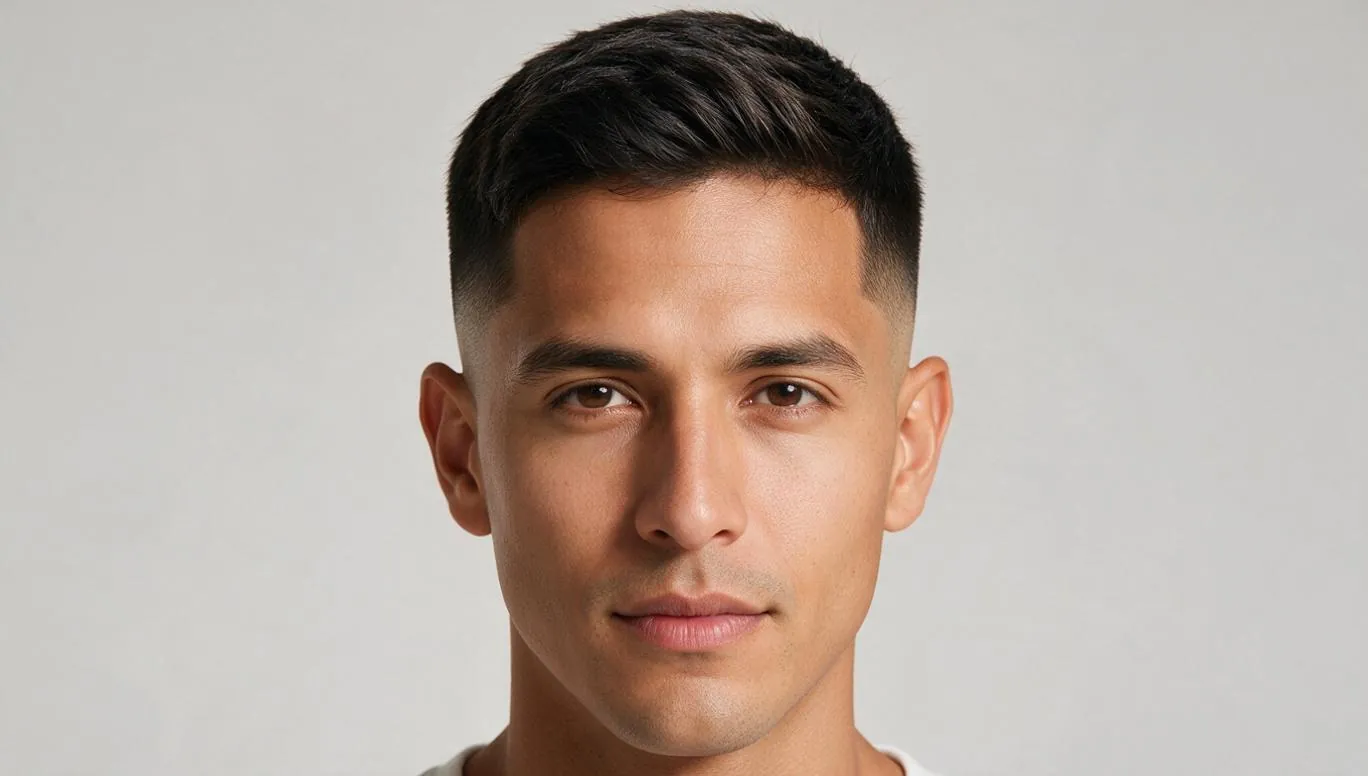
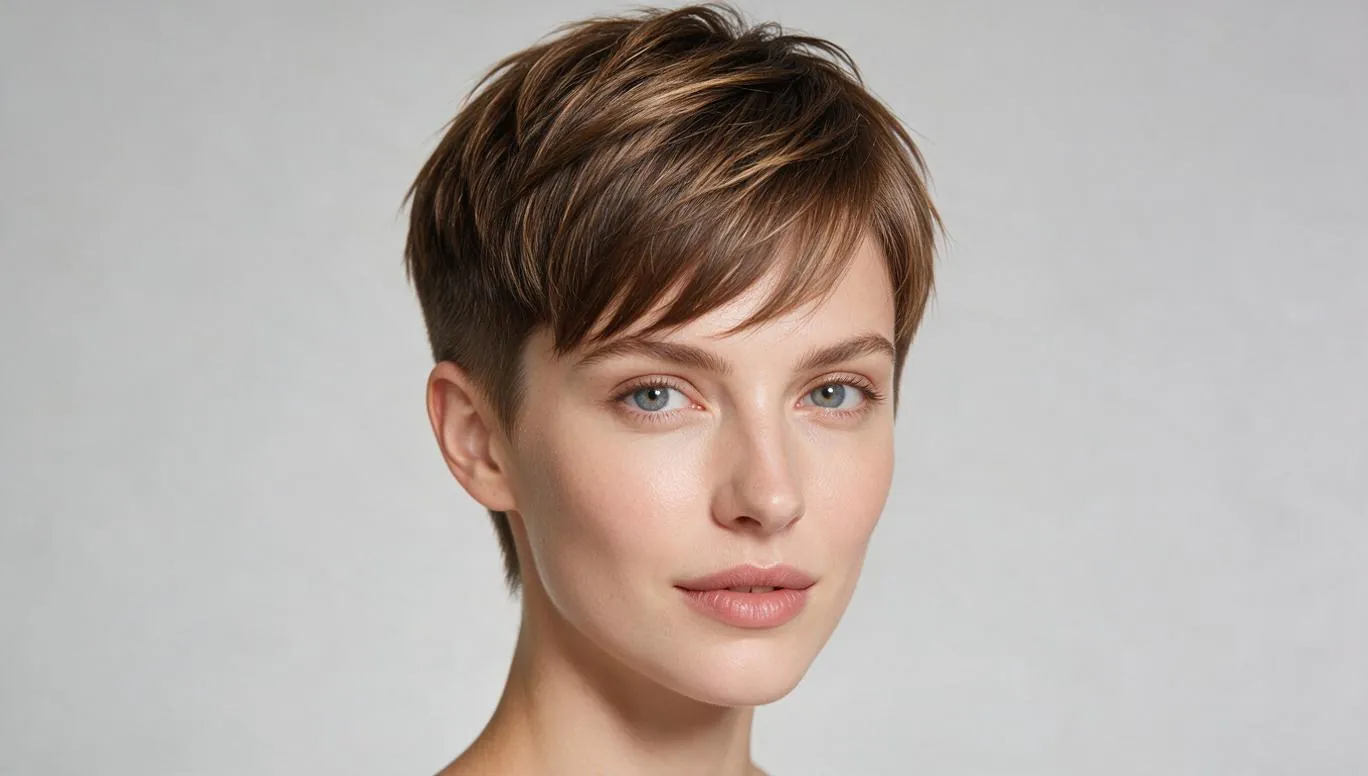
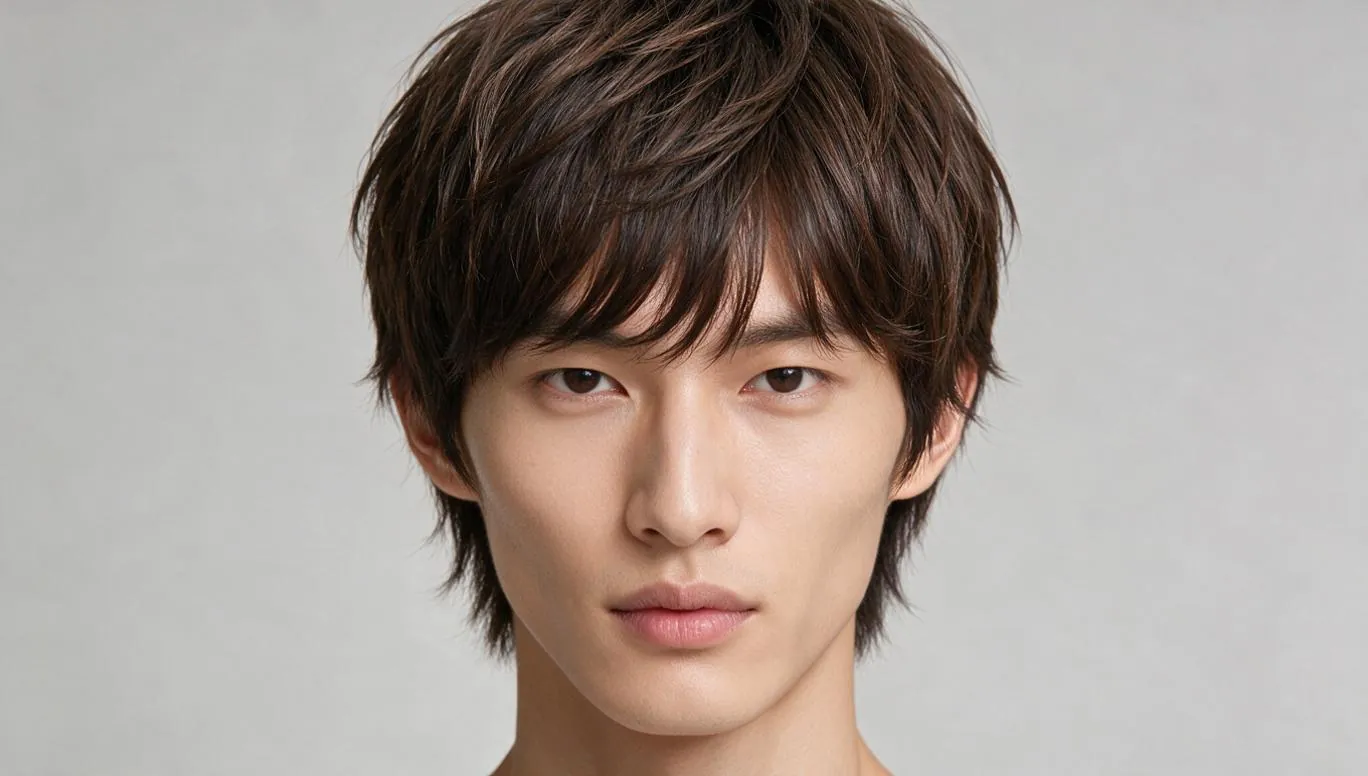
On oval, Long layers avoid bulk at the cheeks, and a Soft pixie keeps cheekbones visible without width at the sides. On diamond, Chin-grazing layers add width at the chin, Soft bangs fill a narrower forehead, and for men's cuts, a Short crop with a little fringe covers the brow. Short, close sides suit both: the Soft pixie on oval, a Pixie with soft bangs on diamond. Diamond avoids tight pulled-back styles that expose the widest cheekbone line.
Frames
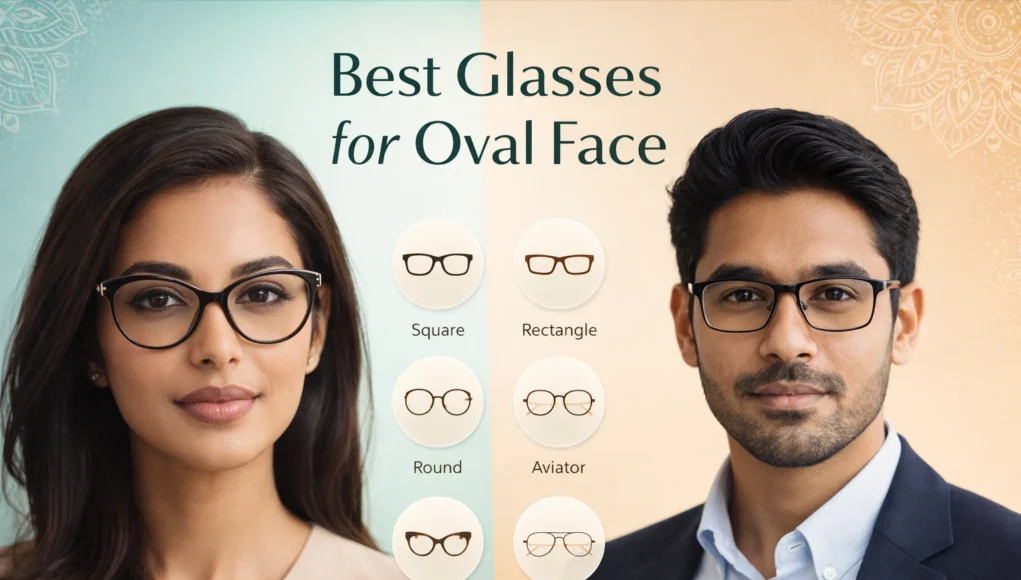
Cat-eye sits on both lists for women's frames: its lifted corner plays off high cheekbones without adding width. Aviator is where they part. On oval, its teardrop adds a little width; diamond skips frames widest at the cheekbone line and picks Oval, Rimless or, in men's frames, Browline. Compare frames in the glasses finder, or see our oval and diamond glasses guides.
Beard (if you grow one)
Oval suits Short stubble. Diamond suits Chin-focused fill, which offsets wide cheekbones; skip hollow cheeks with a tiny chin patch. See the men's face shape guide and the hairstyle recommender.
Not sure if you're oval or diamond?
Upload a front-facing photo, hair off your temples. The face shape detector compares forehead and jaw widths with cheekbone width and face length, then shows oval, diamond or both, with a confidence label and reasons. Landmarks are found in your browser first; the photo is sent once, encrypted, for quality checks and isn't stored.
Check with the face shape detector
Explore further
Oval face shape · Diamond face shape · Oval vs oblong face shape · Heart vs diamond face shape
Frequently asked questions
Why do these get confused in photos?
Lighting and your hairline can hide forehead width, so a diamond can drift towards oval scores, or an oval towards diamond. Pull your hair back and face even light.
Do haircut rules overlap?
Some volume at the jaw works on both: diamond needs it to offset the cheekbones, and oval simply carries it. Diamond faces avoid width at the cheekbone line.
What if I'm somewhere between the two?
That is common. When your measurements sit near the line between two shapes, the face shape detector names both and shows how close you are to each, and styling ideas from either will work.
My cheekbones are my widest point. Am I oval or diamond?
Both shapes can have that, so check your forehead. Noticeably narrower than your cheekbones points to diamond; only a little narrower points to oval.
Does a pointed chin mean diamond?
Not on its own. Both of the detector's diamond routes also need a narrow forehead, and heart faces taper to a point too. See heart vs diamond face shape.
Why did my result say Medium or Lower confidence?
Shadow at your temples, hair over your forehead or a head turn held the read back, or oval and diamond scored close. Lower confidence is an honest result, not an error, and a straight-on photo in even light usually firms it up.