Oval vs Oblong Face Shape
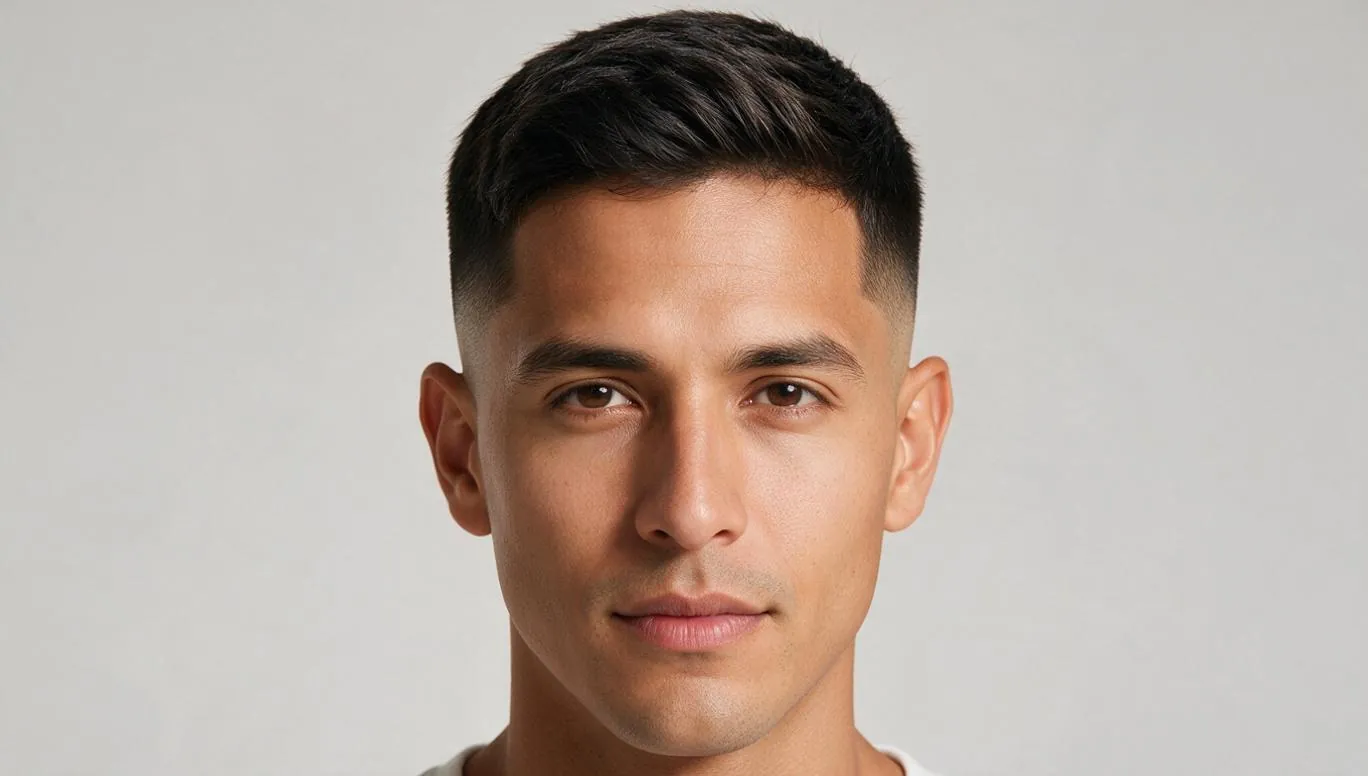
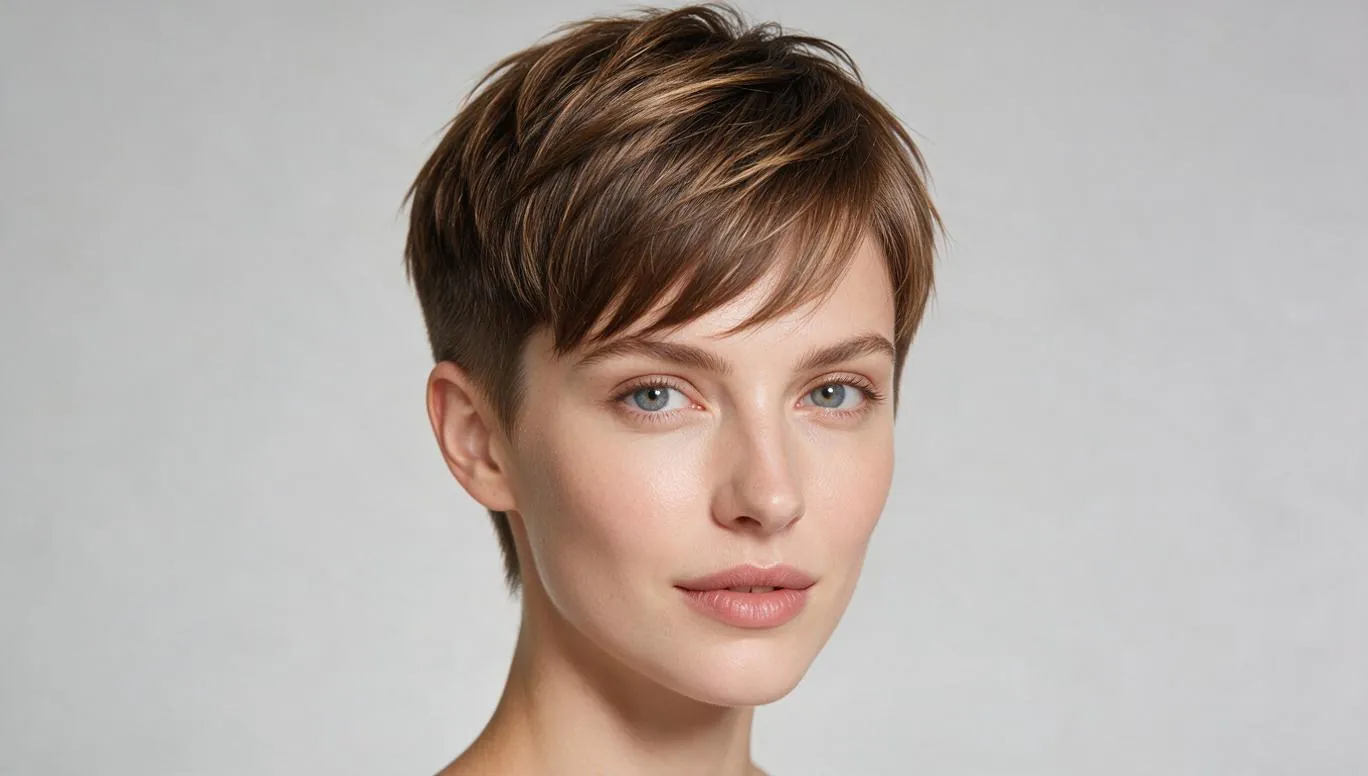
Oval and oblong faces both read longer than wide, but oblong keeps forehead, cheek, and jaw widths more even while oval often shows cheekbones as the widest third.
Quick answer
Close neighbours. Length decides.
Oblong is longer, with forehead, cheeks and jaw close to the same width. Oval is shorter, with cheekbones clearly the widest point. The detector scores oval when face length is 1.18 to 1.23 times cheekbone width, and oblong from 1.25, so a face measuring about 1.24 scores on neither length band.
Check your shape from a photoKey difference: Length emphasis versus cheekbone-led width
The deciding measurement is face length divided by cheekbone width. The detector scores oval between 1.18 and 1.23, adding points for a jaw angle of 136° or wider. It scores oblong from 1.25 with a chin angle of 105° or wider, adding points for a balanced jaw.
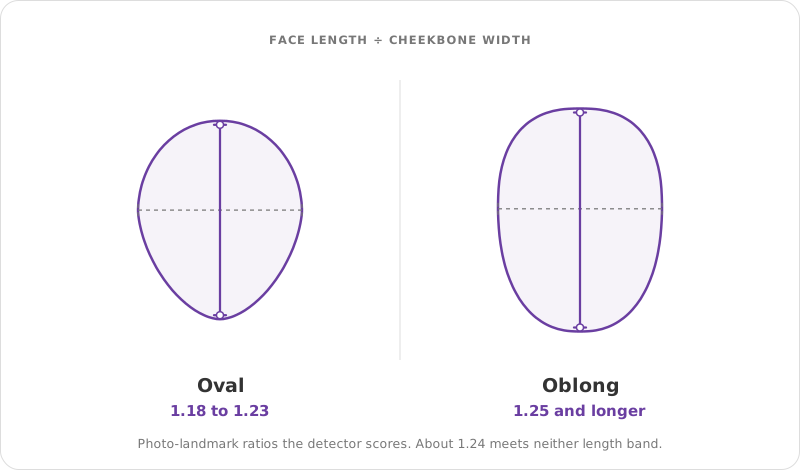
Near the line, check the width. Oval's cheekbones lead and the jaw tapers; oblong's three widths stay close, with straighter sides.
The detector measures length from its forehead outline, below your hairline, so its numbers run lower than a tape measure's. Measuring by hand? Use the face shape calculator, which has its own reference numbers.
Which one are you? The mirror check
Use a mirror or a front-facing photo, hair pulled back.
- Are your cheekbones clearly wider than your forehead and jaw? Yes points to oval.
- Is your face noticeably longer than it is wide? Yes points to oblong.
- Do the sides of your face run fairly straight from temple to jaw? Yes points to oblong.
- Does your jaw curve smoothly into a rounded chin? Yes points to oval.
Oval and oblong side by side
The first three rows are what a mirror shows.
| Aspect | Oval | Oblong |
|---|---|---|
| Length-to-width | Moderately longer | Noticeably longer |
| Widest third | Often cheekbones | Widths stay fairly even |
| Jaw | Gently rounded taper | Straighter vertical sides |
| How the detector scores it | L/W ∈ [1.18, 1.23]; + ∠jaw ≥ 136°; + W_forehead / W_cheek < 0.70 with W_jaw / W_cheek ≤ 0.89 | L/W ≥ 1.25 and ∠chin ≥ 105°; + W_jaw / W_cheek ≥ 0.87; + ∠jaw 135°–138° |
| Styling aim | Keep the balance you already have: most lengths, partings and frame shapes work. | Add width and break up length: volume at the sides, a fringe, and wide or deep frames. |
These are scoring rules, not gates: a face earns points on every shape whose conditions it meets, and the highest score leads.
When photos sit between both
Oval's length band ends at 1.23 and oblong's starts at 1.25. A face in that gap scores on neither length band, so its other measurements decide, and the detector often names both and shows how close each is.
A tilted chin changes how long your face reads, and hair over your forehead hides the outline's top. Keep the photo level, hair back.
Mostly oval, some oblong? Borrowing a fringe or side volume from the oblong advice is reasonable.
Styling implications
For this pair, frame advice mostly agrees; hair height goes in opposite directions.
Hair
On oval, most lengths work, and Long layers avoid bulk at the cheeks. On oblong, Blunt or curtain bangs cut vertical length, and a Fringe with a medium crop shortens the face fastest. Height splits them: a short Soft quiff is optional on oval, while oblong avoids extra height on top and very long, straight, center-parted hair.
Frames
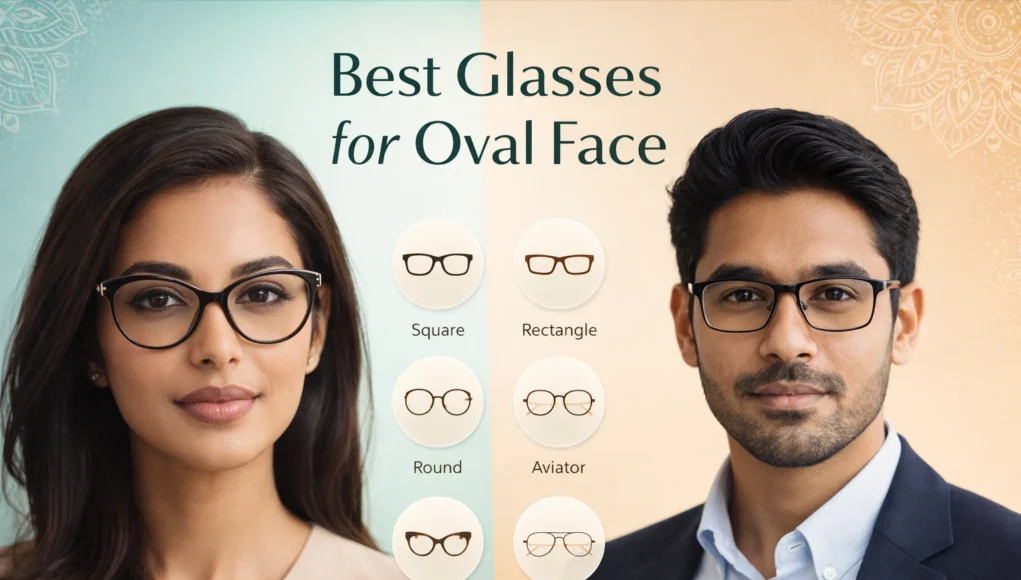
Wayfarer, Aviator and Cat-eye sit on both lists; on oblong, the Aviator's side width shortens a long face. Oval also lists Rectangle (a frame family, not oblong's alias). Oblong adds Browline, whose bold top line stops the face reading extra-long, and skips very narrow or extra-tall frames. Use the glasses finder, or read best glasses for an oval face and best glasses for an oblong face.
Beard (if you grow one)
Oval suits Short stubble; oblong suits Wider cheek coverage, shorter chin. They diverge at the chin: oblong avoids long pointed chin beards; oval changes chin density before length. See the men's face shape guide.
For a blend result, the hairstyle recommender pulls cuts from both lists.
Not sure if you're oval or oblong?
Upload a front-facing photo. The face shape detector compares your length and widths, names your shape with a confidence label, and shows both when you sit between them. Landmarks are found in your browser first; the photo is sent once, encrypted, for quality checks and isn't stored.
Check with the face shape detector
Explore further
Oval face shape · Oblong face shape · Oval vs diamond face shape · All seven face shapes
Frequently asked questions
Can one photo score both oval and oblong?
Yes. The detector reports blend scores when landmarks sit between families. Oval's length band ends at 1.23 and oblong's begins at 1.25, with a small gap between them.
Which matters more for glasses?
Oblong faces benefit from wider frames; oval faces can wear most widths with slight cheekbone balance. Aviator and Wayfarer suit both.
What if I'm somewhere between the two?
That is common. When your measurements sit near the line between two shapes, the face shape detector names both and shows how close you are to each, and styling ideas from either will work.
Why does a tape measure make my face look longer than the detector does?
A tape runs from your hairline; the detector measures from its forehead outline, which sits lower. The two use different reference numbers, so compare a tape result only with the face shape calculator.
Is oval more balanced than oblong?
No. Balanced only describes widths tapering evenly; it says nothing about how anyone looks. No face shape is better than another.
Why did my result say Medium or Lower confidence?
A tilted chin, uneven light or hair over your forehead held the read back, or oval and oblong scored close. Lower confidence is an honest result, not an error, and a straight-on photo in even light usually firms it up.